New
This Week
Everything new is here.
News
News Centre
News archive

Basics
Start here
Anglicans believe...
The Prayer Book
The Bible
Letters
Read letters to AO
Write to us
Resources
Resources A to Z
World Anglicanism
Anglican Communion
In full communion
Not in the Communion
Dioceses
and Parishes
Africa
Australia
Canada
England
Europe
Ireland
Japan
New Zealand
Scotland
USA
Wales
World
Vacancies
Centre
List a vacancy
Check openings worldwide
Add a site
or link to AO
Add a site to AO
Link to AO
About Anglicans
Online
Back issues
Staff
Awards and publicity
Beginnings, AO
at 5
Sponsors
About our logo

|
|
Hallo
again to all.
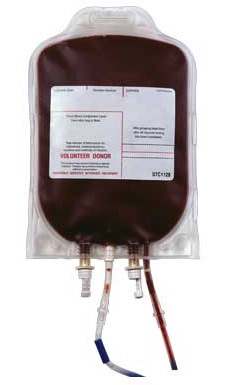 Last
Monday, we did something considered heretical by one of the fastest-growing
religious groups in the world.* It took about half an hour, involved
filling out a form with a few dozen questions, and sitting
still for a bit. Then there were biscuits, granola, jelly beans and
juice. For Jehovah's Witnesses, this thirty or forty minutes spent
in donating blood — something we try to do every eight weeks
or so without fail — put us clearly outside the bounds of Christianity. Last
Monday, we did something considered heretical by one of the fastest-growing
religious groups in the world.* It took about half an hour, involved
filling out a form with a few dozen questions, and sitting
still for a bit. Then there were biscuits, granola, jelly beans and
juice. For Jehovah's Witnesses, this thirty or forty minutes spent
in donating blood — something we try to do every eight weeks
or so without fail — put us clearly outside the bounds of Christianity.
On scriptural,
doctrinal, theological and medical grounds, Jehovah's Witnesses find
convincing evidence for their belief that blood donation and transfusion
is entirely against the will of God. For them, it is not an adiaphoron,
a matter on which believers may disagree; it is an indicator of
who is inside and who is outside the body of fellowship. On all of
the same counts, we believe blood donation to be something that can
express the best spirit of Christian self-giving and sacrifice when
it is done in a safe medical facility. Evaluating all the same sources,
we find no reason for religious opposition and many positive reasons
for religious people who can donate to do so. Blood drives are not
infrequent occurrences at parish churches in our experience, and they
can be a thoughtful manifestation of a congregation's tangible care
for the community in which it is planted. (We count ourselves fortunate
to live in places with efficient and safe systems for blood collection,
screening and distribution.)
 We
are thankful, too, for a physical constitution that doesn't miss a
pint here and there, and want to make it clear that we do not think
of blood donation as a religious duty, regardless of medical disposition.
The regular opportunity to donate, however, began as a kind of rite
of passage in our rural high school at an annual blood drive, and has
continued to be a concrete way of sharing personal renewable resources
with others who might need them. On a few occasions it has even been
possible to make a direct donation for a friend who was scheduled for
an operation, or for a relative with the same blood type. A few hours'
wooziness always disappears in short order, but the medical benefits
to patients in need are lasting and undoubtedly in some cases life-saving. We
are thankful, too, for a physical constitution that doesn't miss a
pint here and there, and want to make it clear that we do not think
of blood donation as a religious duty, regardless of medical disposition.
The regular opportunity to donate, however, began as a kind of rite
of passage in our rural high school at an annual blood drive, and has
continued to be a concrete way of sharing personal renewable resources
with others who might need them. On a few occasions it has even been
possible to make a direct donation for a friend who was scheduled for
an operation, or for a relative with the same blood type. A few hours'
wooziness always disappears in short order, but the medical benefits
to patients in need are lasting and undoubtedly in some cases life-saving.
 Surely Anglicans,
who have no opposition to blood donation and transfusion on religious
grounds, have reason to make the point that we believe this to be a
medical procedure vouchsafed to us in providence as a safe and worthwhile
thing. There is nothing particularly Anglican about blood donation,
but as Jehovah's Witnesses continue to grow at an astonishing pace,
and mainline churches maintain membership levels or even decline, it
may be possible that some day Anglicans', Methodists', Moravians' and
Lutherans' Surely Anglicans,
who have no opposition to blood donation and transfusion on religious
grounds, have reason to make the point that we believe this to be a
medical procedure vouchsafed to us in providence as a safe and worthwhile
thing. There is nothing particularly Anglican about blood donation,
but as Jehovah's Witnesses continue to grow at an astonishing pace,
and mainline churches maintain membership levels or even decline, it
may be possible that some day Anglicans', Methodists', Moravians' and
Lutherans'  ability to donate and receive blood will be as distinct
a matter in some religious landscapes as questions of polity, dietary
restrictions or worship style are today. We are not aware of any Anglican
synodical pronouncements to date on the permissibility of blood donation
and transfusion, but it could be that their day will come. ability to donate and receive blood will be as distinct
a matter in some religious landscapes as questions of polity, dietary
restrictions or worship style are today. We are not aware of any Anglican
synodical pronouncements to date on the permissibility of blood donation
and transfusion, but it could be that their day will come.
Sociologists
of religion note that Jehovah's Witnesses have grown at
a faster rate throughout the world than Latter-Day Saints (Mormons),
members of another  highly-visible religion that began in the United States
in the nineteenth century. If current membership trends continue,
in relatively short order there will be more Jehovah's Witnesses
than Anglicans in North America. Jehovah's Witnesses
could well outstrip worldwide Anglicanism in numerical strength
in the current century. In that event, how will we distinguish ourselves
doctrinally, practically, publicly and in every phase of Christian
life? Our exegetical, liturgical, sacramental, musical, artistic
and homiletical traditions provide highly-visible religion that began in the United States
in the nineteenth century. If current membership trends continue,
in relatively short order there will be more Jehovah's Witnesses
than Anglicans in North America. Jehovah's Witnesses
could well outstrip worldwide Anglicanism in numerical strength
in the current century. In that event, how will we distinguish ourselves
doctrinally, practically, publicly and in every phase of Christian
life? Our exegetical, liturgical, sacramental, musical, artistic
and homiletical traditions provide  clear paths forward, to be sure.
So does our commitment to historical, creedal definitions of the
Christian faith with respect to the Trinity and the incarnation.
Could it be that medical ethics-on-the-ground in instances like blood
donation will be added to those Anglican distinctives? clear paths forward, to be sure.
So does our commitment to historical, creedal definitions of the
Christian faith with respect to the Trinity and the incarnation.
Could it be that medical ethics-on-the-ground in instances like blood
donation will be added to those Anglican distinctives?
Practically
speaking, blood donation is one way in which we who are able to do
so can incarnate a significant and effective way of loving
our neighbours as Christ has loved us. So far from being a heresy or
a marker of who is outside the body of Christians, it is a good and
joyful thing.
See
you next week.

All of us here at Anglicans Online
Last
updated: 5 February 2006
URL: http://anglicansonline.org
* Jehovah's
Witnesses (formally known as the Watchtower Bible and Tract Society or
the International Bible Students Association) began in 1879 and now
number 13 million adherents; the Church of Jesus Christ
of Latter-Day Saints (Mormons) started in 1830 and count 11 million
members today. |