|


|
|
Hallo again to all,
Of late, many of our friends and colleagues seem to be writing books.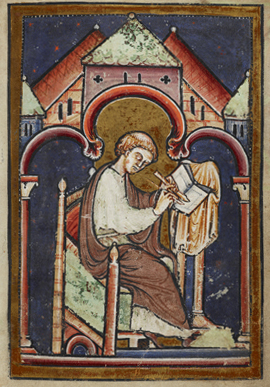 All of us at Anglicans Online are experienced editors, and the people around us know this. We have had the honour of being asked to read and edit numerous manuscripts and manuscripts-in-progress on topics ranging from biographies of figures in Anglican history to imperial Roman government to histories of small towns and even a 'vampiric' take on a classic Jane Austen novel. We find these assignments both welcome and, we must admit, a wee bit intimidating. The process of reviewing the work of dear friends and finding and suggesting changes while maintaining the voice and intent of the author—without getting lost in the often-interesting material, can all be a bit overwhelming. All of us at Anglicans Online are experienced editors, and the people around us know this. We have had the honour of being asked to read and edit numerous manuscripts and manuscripts-in-progress on topics ranging from biographies of figures in Anglican history to imperial Roman government to histories of small towns and even a 'vampiric' take on a classic Jane Austen novel. We find these assignments both welcome and, we must admit, a wee bit intimidating. The process of reviewing the work of dear friends and finding and suggesting changes while maintaining the voice and intent of the author—without getting lost in the often-interesting material, can all be a bit overwhelming.
While in graduate school we often found ourselves editing dissertations and theses for colleagues and acquaintances, yet somehow, we find that using those same skills for a larger work for those who matter to us is an entirely different—though no less welcome—challenge. The amount of one's self that goes into a book—the passion, dedication, and at times, obsession leaves us both envious and intrigued. Ancient cultures—likely predating the Etruscans—believed that creativity and ideas came from outside ourselves—the Romans called this source of inspiration the genius, though the communal source of creativity was of course, the muse. Genii were a personal sort of advisor, a bit like the devil and angel often found sitting on the shoulders of cartoon characters. Genius was therefore attributed to the, well, genius rather than the person themselves. We today, of course honour those who do the work themselves, though often do ask those accomplished at music, literature, etc, where they get their inspiration. While some say they were 'blessed', others point to a specific location, or another work of literature, most admit to years of hard work, persistence, and failure, though some avoid answering the question altogether.
There are those ... who think that the man who works with his imagination should allow himself to wait till ... inspiration moves him. When I have heard such doctrine preached, I have hardly been able to repress my scorn. To me it would not be more absurd if the shoemaker were to wait for inspiration, or the tallow-chandler for the divine moment of melting. - Anthony Trollope, An Autobiography, 1883
The secret of getting ahead is getting started. The secret of getting started is breaking your complex overwhelming tasks into small manageable tasks, and then starting on the first one. - Mark Twain
Any man who keeps working is not a failure. He may not be a great writer, but if he applies the old-fashioned virtues of hard, constant labor, he'll eventually make some kind of career for himself as writer.
- Ray Bradbury
and yet George Orwell, on four universal motives for creation, writes
Sheer egoism.… Writers share this characteristic with scientists, artists, politicians, lawyers, soldiers, successful businessmen—in short, with the whole top crust of humanity.*
 We suppose that we, like those for whom we are editing, are privileged to have the time to write (though sometimes writing a book is a component of a career path). We suppose that we, like those for whom we are editing, are privileged to have the time to write (though sometimes writing a book is a component of a career path).
Almost all of us here at Anglicans Online work in some sort of technology-intensive field. Long spans of time are spent staring at screens.** We find refuge in books—in the physical object of a paper book. In holding the solid item that takes us away from the here and now, absorbing our minds and awareness to transport us to a world of escape. Of a lovely yard on a Canadian Island, swinging from a tree branch, or a fast paced chase through the streets of New York complete with cars crashing into rubbish bins—the feel of the stones on a damp London street or the feeling of fear and determination on a historic battlefield.
The need to escape, by reading or by writing, offers a freedom from daily burdens that we often find ourselves craving, particularly in the journey through Lent.
Whether for ego, from inspiration, a need for affirmation, to make others happy, or a desire to share, we'll see you next week, when it will be Palm Sunday, a day filled with a very different sort of passion.

|